

Fraud prevention was always a key checkpoint at the start of the process for years. They confirm a company’s identity during onboarding, approve the relationship, and proceed with confidence. But that might have worked when business relationships were simpler, and if risks changed more slowly.
Fraud techniques have evolved over the years. Companies undergo certain transformations, such as changing ownership, expanding into new jurisdictions, coming under regulatory scrutiny, or being involved in financial crime investigations after approval.
It can be a very risky business, and even one that looks legitimate at the time of onboarding, without raising any immediate signs.
This change challenges organizations to re-evaluate their approach to business fraud prevention. Leading organizations are establishing continuous oversight throughout the life cycle of the business relationship rather than treating it as a one-time task.
The issue now is not whether a company passed the verification process, but whether it is actually verified.
The Evolution of Business Fraud
Business relationships are increasingly used to commit fraud. Many of them don’t go after security controls specifically, but rather legitimacy first.
They generate seemingly compliant entities, prepare documents, and establish relationships with vendors, financial institutions, marketplaces, and corporate partners.
Over time, trusted relationships can mask deteriorating risk profiles. Ownership arrangements can be altered. New directors can be appointed. There is the possibility that hidden beneficial owners can emerge and exert influence. Bad news can emerge on the horizon, and regulatory measures can be imposed.
In certain instances, businesses are linked to larger networks that are used for financial fraud, posing a high risk for companies that rely solely on front-end verification methods.
Therefore, business fraud protection is no longer limited to onboarding; it’s now about understanding the life cycle of each business relationship.
Why Traditional Fraud Prevention Creates Blind Spots
There are many businesses that still rely on a model that looks like this:
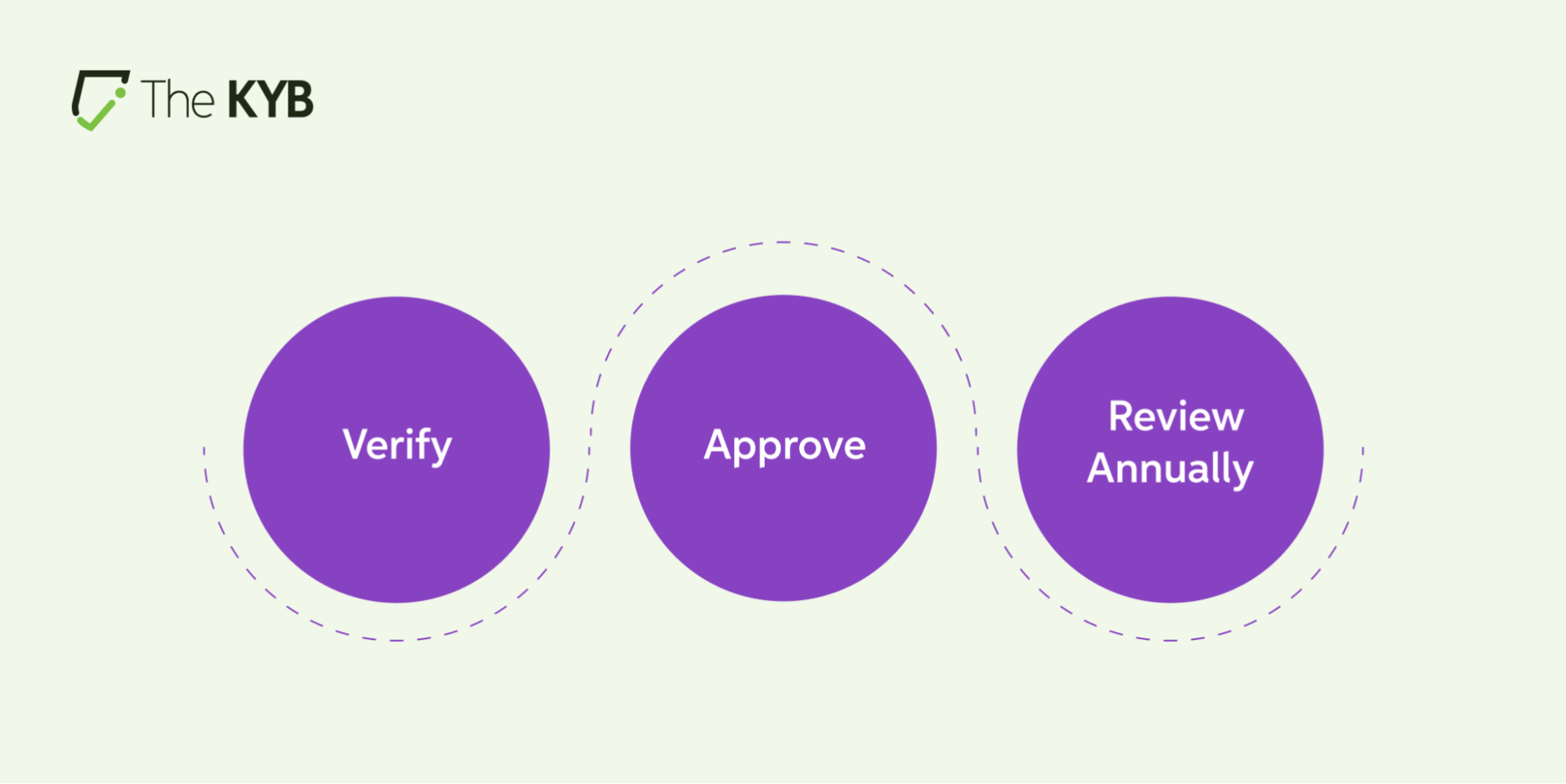
The issue is that risk never waits for annual reviews.
Significant changes in a company can occur in just a matter of weeks. A PEP may become a beneficial owner. Sanctions can be imposed nightly, and adverse news can spring up out of the blue.
If an organization is solely reliant on periodic reviews, it leaves a gap in its security that can be taken advantage of by fraudsters.
It is a challenge that affects companies across sectors, including financial services, fintech, e-commerce, procurement, supply chain management, and professional services.
If not continually monitored, an organization can have relationships with entities that do not comply with its risk tolerance standards.
Modern fraud risk management strategies are different from traditional approaches; however, this is where they diverge.
The transition from verification to continuous trust.The move from verification to continuous trust.
The Shift From Verification to Continuous Trust
One of the most significant shifts in fraud prevention is the movement toward continuous monitoring.
Historically, Know Your Business procedures focused primarily on onboarding. The objective was to verify that a company existed and collect the information necessary for compliance requirements.
Today, organizations are expanding that mindset.
They recognize that business risk is dynamic. Corporate structures evolve. Ownership networks shift. Regulatory environments change, and information is updated daily.
This means that the best enterprise fraud prevention programs emphasize trusted relationships and ongoing verification.
Organizations do not question the trustworthiness of a company when they onboard it, but rather, they ask, “Is the company trustworthy today?
With this shift, companies can be aware of possible risks that could develop into large-scale compliance, operational, or reputational issues.
The Role of Business Fraud Monitoring
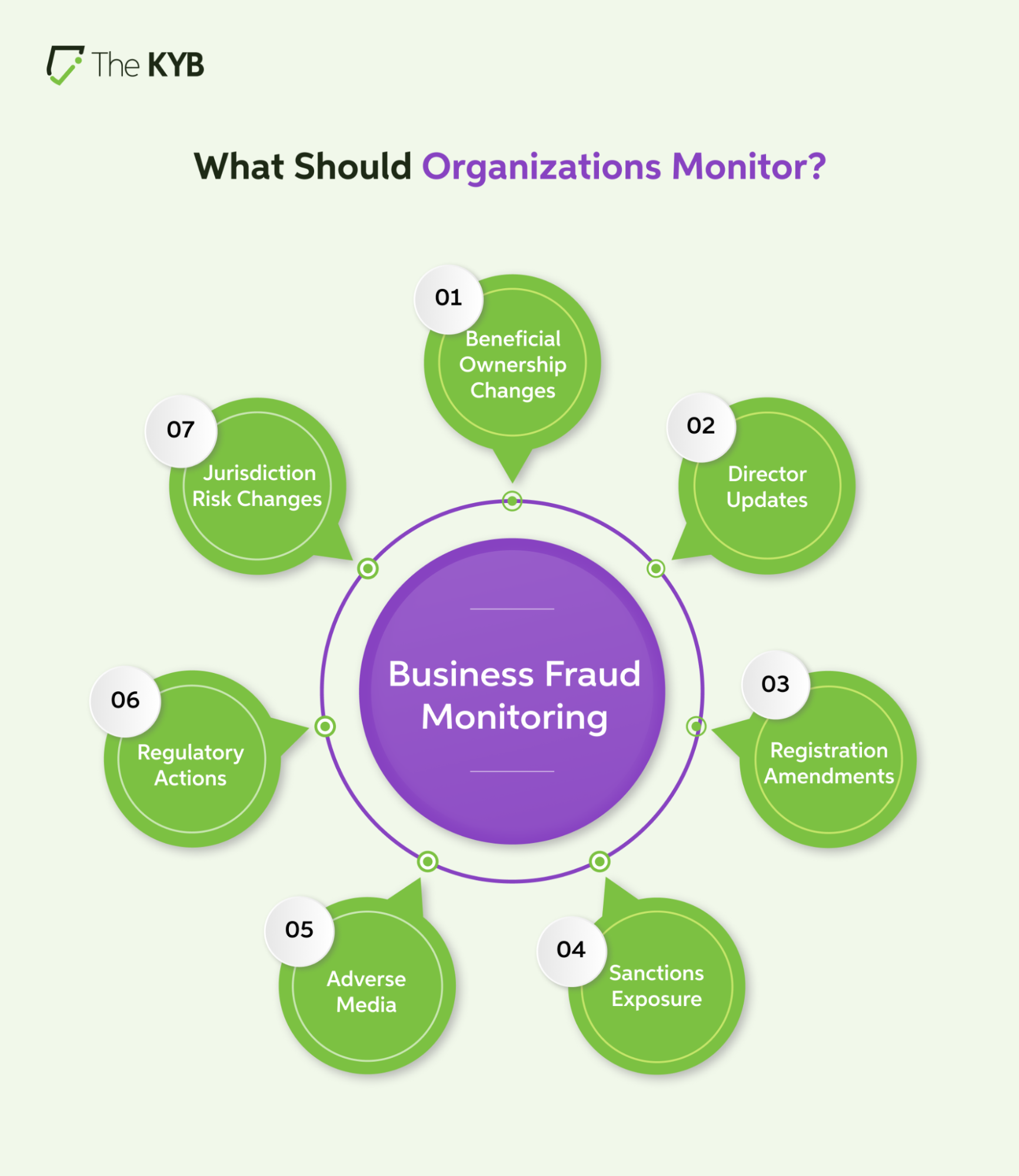
Strong, consistent business fraud monitoring is vital to continuous oversight. Monitoring enables organizations to detect relevant changes in the business environment, such as:
- Changes in beneficial ownership
- Director and shareholder updates
- Corporate registration amendments
- Sanctions exposure
- Adverse media developments
- Regulatory enforcement actions
- Jurisdictional risk changes
All of these events may indicate increased risk and should be investigated further.
For instance, a supplier look like a low-risk entity during onboarding can be linked to a person under investigation for financial crime. If left unchecked, that can go undetected until extensive damage has been done.
Continuous monitoring shifts fraud prevention from a reactive to a proactive risk management process.
Why Corporate Structures Matter More Than Ever
The trick to many fraud schemes is complexity. The fraudsters often employ complex ownership structures, shell companies, nominee directors, and multinationals to disguise their operations.
This makes it impossible to simply make the verification checks. Organizations need clarity on who the owner and the controller of the businesses they are transacting with are.
They should be able to discover relationships that are not obvious, find the business owners, and establish the source and destination of the funds.
That is how corporate transparency is essential to today’s corporate fraud protection. The context in which basic registration checks do not provide sufficient information is highlighted by understanding the structure of a business.
Knowledge of who is behind the fraud network will allow companies to make more informed decisions about the risk exposure or business relationship.
As fraud networks continue to evolve and grow increasingly sophisticated, it will continue to become more valuable to “know your partner.”
Five Indicators That a Previously Trusted Business May Have Become High Risk
Business relationships should never be viewed as static.
Organizations should pay close attention to changes that may indicate elevated fraud risk.
Changes in Beneficial Ownership
A new owner may introduce risks that were not present during onboarding.
Director and Management Changes
Frequent leadership changes can sometimes signal instability or attempts to conceal ownership.
Emerging Adverse Media
Negative media reports may reveal investigations, allegations, or reputational concerns.
Regulatory Actions
Enforcement actions often indicate heightened compliance and operational risks.
Corporate Structure Modifications
Sudden changes in ownership chains or jurisdictional arrangements may warrant additional review.
Identifying these developments early helps organizations strengthen their overall business fraud protection framework.
How to Prevent Business Fraud in a Dynamic Risk Environment
Organizations often ask, how to prevent business fraud when threats continue to evolve.
The answer is not a single control or technology.
Effective fraud prevention requires a layered strategy that combines verification, risk assessment, transparency, and continuous monitoring.
A modern framework should include:
- Business verification before onboarding
- Beneficial ownership identification
- Corporate structure analysis
- Risk-based due diligence
- Sanctions screening
- Adverse media monitoring
- Ongoing monitoring throughout the relationship lifecycle
When these elements work together, organizations gain a much clearer understanding of both current and emerging risks.
This approach allows businesses to identify warning signs earlier and make better informed decisions about their third-party relationships.
Building a Sustainable Enterprise Fraud Prevention Strategy
The future of fraud prevention is not about conducting more reviews. It is about maintaining better visibility.
Organizations that treat fraud prevention as a one-time onboarding requirement will continue to face unexpected risks. Those that adopt continuous oversight gain the ability to respond to changing circumstances before those risks escalate.
Modern enterprise fraud prevention requires organizations to understand not only who they are doing business with today, but also how those businesses evolve over time.
Solutions such as The KYB support this shift by helping organizations verify businesses, uncover beneficial ownership structures, assess risk, and maintain ongoing visibility across the entire business relationship lifecycle.
The biggest challenge in modern business fraud prevention is no longer identifying risky businesses at the point of onboarding.
The real challenge is identifying when previously trusted businesses become risky.
As business relationships become more interconnected and corporate structures become more complex, organizations need more than one-time verification. They need continuous insight into the businesses they rely on every day.
Effective fraud risk management, business fraud monitoring, and corporate fraud protection depend on the ability to detect change as it happens.
In an environment where risk evolves constantly, continuous trust has become one of the most powerful forms of fraud prevention.
Trust Requires More Than Verification
Business fraud prevention is often treated as a point-in-time exercise. Yet some of the most significant risks emerge long after a business relationship begins.
Organizations that can identify changes in ownership, reputation, regulatory exposure, and risk profile are better positioned to make informed decisions and protect their operations from evolving threats.
The KYB helps organizations build greater confidence in the businesses they work with by supporting a more continuous approach to trust, due diligence, and risk oversight.
Learn how a lifecycle approach to business verification can strengthen your fraud prevention strategy.