In September 2025, a Rhode Island business owner was sentenced to four years in prison for laundering more than $35 million in proceeds from internet fraud schemes.
According to the US Department of Justice, he used his virtual CFO business as a front to create shell companies and open fraudulent business bank accounts in Rhode Island and Massachusetts.
The case illustrates an important challenge for fraud detection in banking. A suspicious transaction could be the next step in getting the investigation started, but the risk could be introduced into a financial system much sooner still when a shell company passes onboarding and is granted access to a business account.
Historically, banks that use transaction rules have relied on customer reports and manual investigations to detect fraud. These controls are still significant, but the threat has grown. With the help of shell companies, stolen business data, false documents, and complicated ownership structures, the fraudsters can now make shady companies appear legitimate.
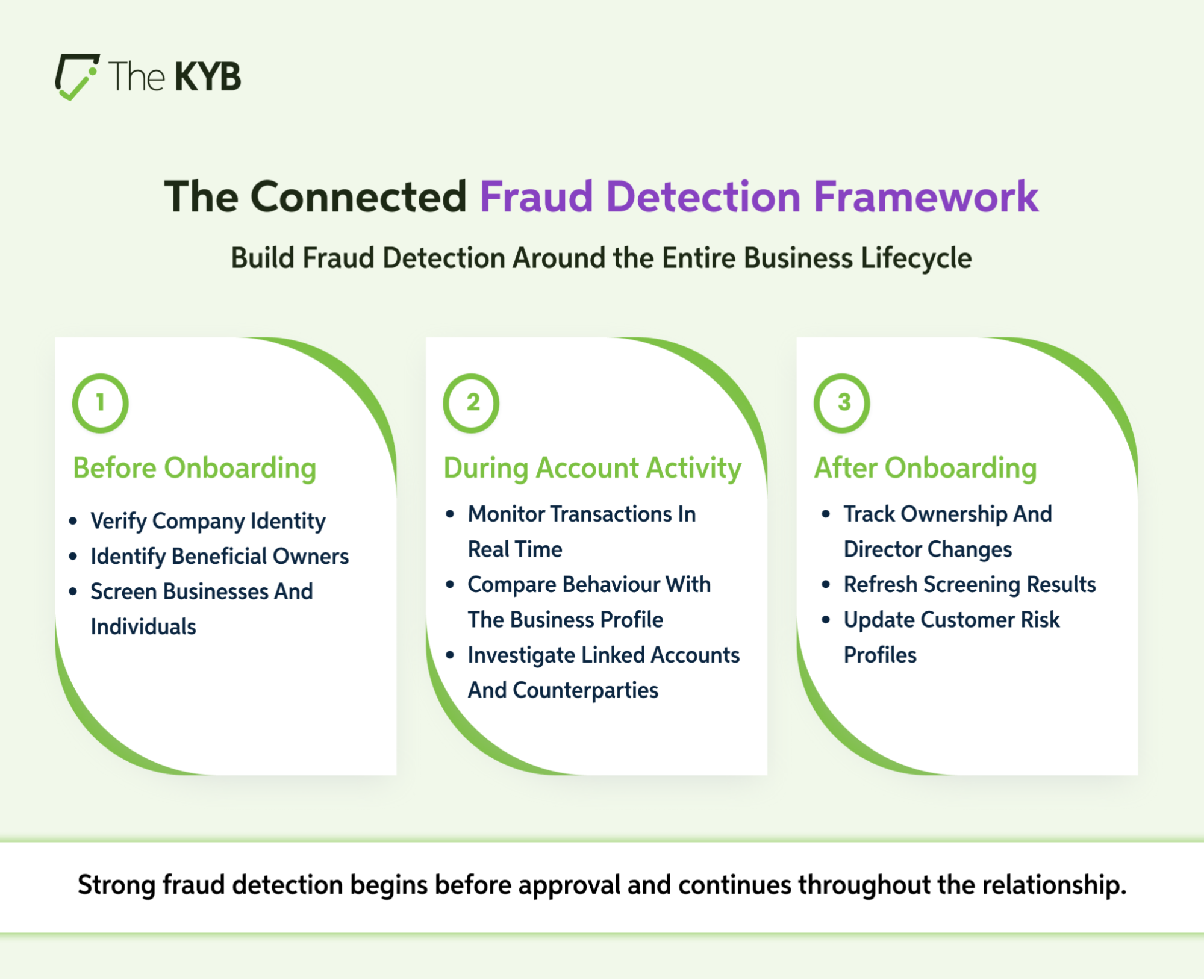
Effective fraud detection and prevention in the banking industry must therefore cover the entire business customer lifecycle. It should start before an account is approved, continue while money transactions are being made, and remain active when the company’s ownership or risk profile changes.
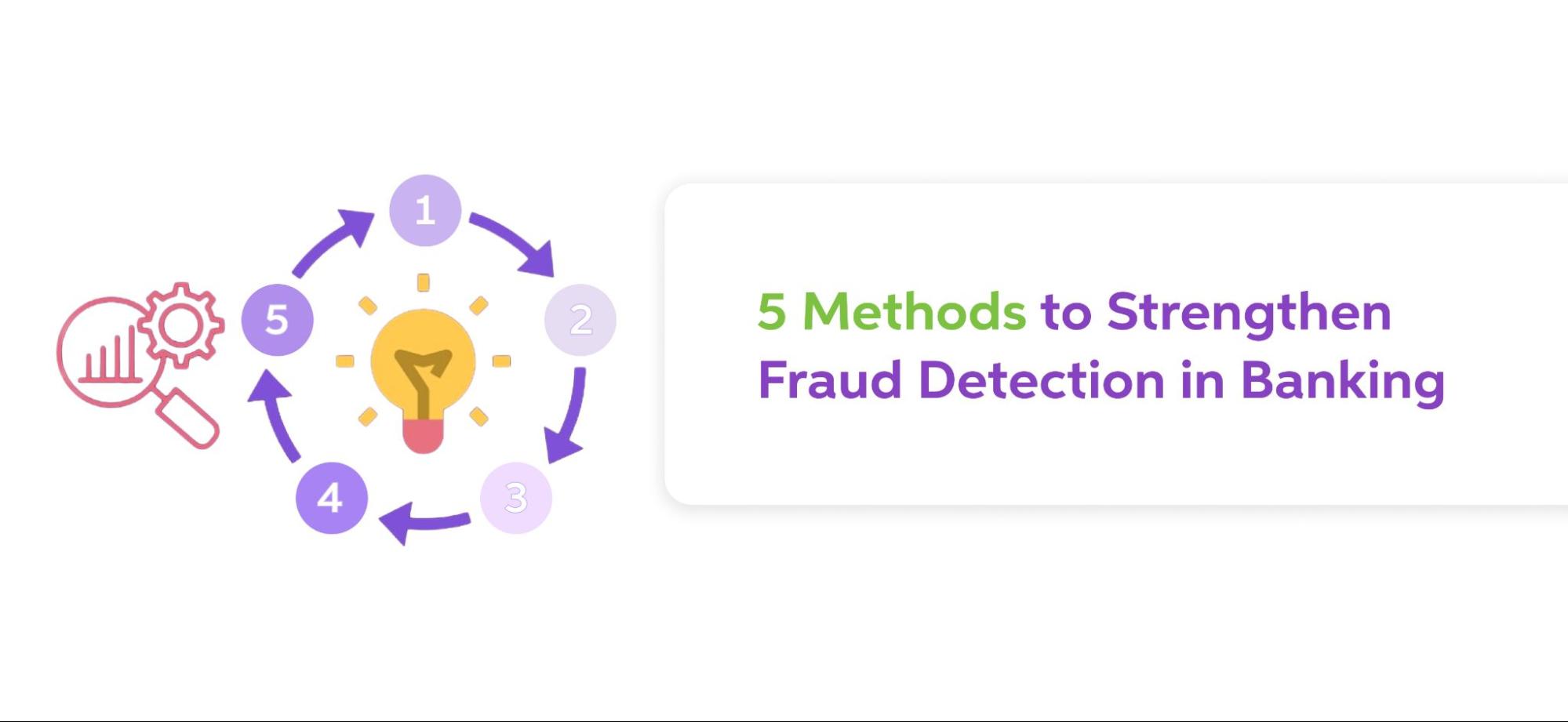
The following five methods can assist the banking industry in identifying fraud earlier and making better decisions about the businesses behind financial activity.
1. Check Businesses Against Official Registries
The initial question is whether a company is real and if its data is consistent with authoritative documents.
Fraudulent applicants may submit an incorrect registration number, a fabricated address, or documents belonging to another business. Others may use a legally incorporated shell company with little evidence of genuine commercial activity.
Banks should verify core company information, such as:
- Legal name and registration number
- Incorporation date
- Current operating status
- Registered business address
- Legal entity type
- Directors and management
- Declared business activity
Registry verification creates a reliable corporate identity before other controls are applied. Differences between submitted data and official records can then be investigated before the applicant receives access to banking services.
The KYB provides real-time access to company information across more than 250 countries and jurisdictions. Its business verification capabilities help validate legal existence, registration details, and ownership information through official corporate registries. It also supports company document retrieval and additional verification where deeper checks are required.
Registry data does not provide a complete fraud verdict. A shell company can still be formally registered. However, accurate corporate information gives banks a trustworthy starting point for further risk analysis.
Among the most valuable fraud detection tools in banking, verified company data is often the layer that makes every later alert easier to interpret.
2. Identify Ultimate Beneficial Owners
A company name reveals little about the individuals who ultimately own or control it.
Fraudsters may place nominee directors or intermediary companies between themselves and a business account. They may also create ownership structures across multiple jurisdictions to make it harder for banks to identify the true beneficiary.
Ultimate beneficial owner checks help banking sectors answer critical queries like:
- What percentage does each owner hold?
- Who ultimately controls the company?
- Are ownership layers commercially reasonable?
- Does the same person control several connected companies?
- Is an owner attempting to remain hidden behind nominees?
- Are any owners associated with elevated compliance risk?
KYB assists organizations in tracking ownership structures and identifying beneficial owners behind multiple structures. It might include directors, controlling parties, shareholders, and ownership percentages in its UBO information.
Ownership analysis is particularly important if a newly established company has a large number of transactions, receives funds unrelated to its business purpose, or has owners or directors in common with entities previously identified as high-risk.
Relationship analysis can also be used by banks to identify groups of companies that share the same people, addresses, or corporate structures. A company might seem like an ordinary company on one hand, and a completely different one on the other.
This is where fraud detection in the banking sector extends beyond just verifying each field. The primary purpose is to understand the people and relationships behind the account.
3. Screen Businesses and Associated Individuals
A company can be legally registered and still present a significant risk.
Its directors, shareholders, or beneficial owners may appear on sanctions lists, hold politically exposed positions, or have links to regulatory action and adverse media. A business may also have a history of insolvency, license revocation, or enforcement activity that is relevant to the bank’s risk decision.
Corporate screening should therefore evaluate the entity and the individuals associated with it. Relevant checks may include:
- Sanctions and watchlists
- Politically exposed person databases
- Adverse media
- Regulatory enforcement records
- Licensing body information
- Bankruptcy and liquidation records
- Internal bank watchlists
The KYB supports corporate screening across businesses and associated individuals. Banks can use these checks during onboarding, enhanced due diligence, and ongoing monitoring.
This combined view is important because risk may not appear against the company’s current legal name. It may sit with an owner, former director, or connected entity.
Screening results should not automatically produce rejection. Common names, outdated records, and incomplete data can create false positives. Banks need configurable matching, documented review procedures, and analysts who can distinguish a meaningful connection from an irrelevant match.
When corporate screening is linked with verified business and ownership data, investigators gain the context needed to make faster and more defensible decisions.
4. Combine AI With Real-Time Transaction Monitoring
Once an account becomes active, the bank must determine whether its behavior matches what was learned during onboarding.
Traditional rule-based monitoring might alert when a transaction exceeds a fixed value or involves a particular location. These rules are useful for known risks, but they may miss fraud that stays below thresholds or spreads activity across several accounts.
AI based fraud detection in banking can examine larger combinations of signals, including:
- Transaction size and frequency
- Sudden changes in account behavior
- Payments inconsistent with the business profile
- Unusual beneficiary relationships
- Rapid movement of incoming funds
- Activity across linked accounts
- Geographic and industry risk
- Repeated transactions below internal thresholds
Models can compare present activity with historical behavior and peer groups. This allows banks to detect patterns that are not visible based on individual rules.
But fraud detection using AI in banking relies on the quality of the data that it is fed. A model can detect something unusual, but there’s still a lot of work for analysts to do to figure out who owns the business, what it says it will do, and whether its counterparties make sense.
That’s what verified KYB data gives you. For instance, a large international payment could be justified for a well-known logistics firm, but it would be unusual for a newly established local consultancy with no clear international operations.
A best-practice strategy involves a blend of rules, machine learning, corporate intelligence, and human review. AI can flag suspicious patterns, which compliance teams can then follow up on to determine whether there’s a business context and whether intervention or escalation is necessary.
This layered model also strengthens real time fraud detection in banking sector operations. Banks can assess transactions as they occur while drawing on reliable information about the company, its owners, and its known relationships.
5. Monitor Business Changes After Onboarding
Business verification cannot remain a one-time event.
A legitimate company may change ownership after opening an account. A new director may carry sanctions or adverse media exposure. A customer may become inactive, enter liquidation, or change its registered address shortly before unusual transaction activity begins.
Banks should continuously monitor material changes, such as:
- New shareholders or beneficial owners
- Director appointments or resignations
- Changes in registered address
- Changes in company status
- New sanctions or adverse media matches
- License suspension or withdrawal
- Insolvency and liquidation filings
- Changes in expected business activity
The KYB supports continuous corporate screening and ongoing risk monitoring so organizations can identify changes after the initial verification stage. Registry information, ownership data and screening results can be reviewed together as part of the wider business due diligence process.
Alerts should be connected with clear review procedures. A change in director may simply reflect normal business activity. Several changes occurring together, followed by a surge in unfamiliar payments, may require deeper investigation.
Ongoing monitoring also keeps customer risk profiles current. Without it, transaction systems may compare new activity with company information collected several years earlier. That leaves analysts working with an outdated picture of the business.
Building a Connected Fraud Detection Framework
No single technology can prevent every form of banking fraud.
Registry checks may confirm that a company exists but not explain its actual purpose. UBO checks may identify an owner but not detect a compromised account. Transaction monitoring may uncover unusual activity only after funds have started moving.
Stronger fraud detection in banking connects these controls rather than operating them as separate checkpoints.
Banks require the following when doing business:
- Verified company information prior to onboarding,
- Clear ownership data in the risk assessment process,
- In-depth corporate screening to assess exposure,
- AI-driven transaction analysis, and
- Ongoing monitoring
Within this, the business verification and corporate intelligence layer is The KYB. By accessing registers in accordance with the official register rules and regulations, banks can identify UBOs, retrieve documents, screen companies, and track them.
Strengthen Fraud Detection with The KYB Before Money Moves
Fraud may ultimately appear through a transaction, but its foundations are often laid much earlier.
Information sharing before the money moves allows banks to have a better chance of uncovering hidden ownership, suspicious relationships, and emerging risks before they become financial losses or regulatory violations.
The KYB aims to verify businesses, identify beneficial owners, and continuously monitor corporate risk across the customer lifecycle at the financial institution level. Improve fraud detection in banking, with trusted business intelligence and quicker risk decisions.
Book a demo with The KYB today.