
The KYB serves as the primary data source for verifying businesses and conducting corporate due diligence in over 250 countries and states.
Whitepapers
Navigating the Complexity of ownership from the lens of Sanction by Extension
Mitigating Business verification complexity with The KYB in MENA Region
Featured Resources
Corporate KYC: Helping Businesses Ensure Compliance & Mitigate Risk
Corporate Screening – Mitigating Fraud Risks Across Industries
A Comprehensive Guide to Business Verification in the Crypto Industry
Identify UBOs Across Diverse Industries with KYB Solutions
Why must Banks Implement Know Your Business (KYB) in Business Onboarding?
Role of Business Verification in International Payment Gateways
KYB for Global Operations: How to Create Cross-Border Business Verification?
Onboard businesses with our swift KYB verification.
Seamlessly bring merchants onboard with quick & secure KYB verification
Expand globally without facing non-compliance challenges
Identify high-risk corporate clients while uncovering UBOs
Mitigate the risk of onboarding a shell company.
Partner with trusted companies and beneficial owners
Fortify your supply chain and ensure enhanced security
Mitigating Business Verification Complexity with The KYB in MENA Region
Your 101 Guide to Verify a Company in Portugal
What ECCTA Means for Business Verification in 2026 and Beyond
What are Significant Beneficial Ownerships, and How to Identify Them
Business Verification in LATAM: KYB Challenges, Regulations & Solutions
Business Partner Verification: Protecting Organizations from Potential Risks
7 Ways KYB Defends Against the Rising Synthetic Business Fraud
Onshore Vs Offshore Company: What Businesses Need to Know
Why Know Your Business (KYB) Matters in Finance and Banking
Financial Due Diligence (FDD) Process and its Impact on Business
Reimagining KYB: Speeding Up Business Onboarding with AI
How Corporate Registry Data Helps Businesses with Risk-Based Onboarding Decisions
Company Legitimacy: Red Flags That Can Undermine Business Credibility
What Every Regulated Business Must Know About KYB Verification in 2026
An Expert Guide to Vendor Audit Process for Compliance
Best Practices for Remote KYB Onboarding
How Ongoing Due Diligence Protects Businesses Beyond Onboarding
AI in KYB: Integrating Accurate Data for Smarter Verification Solutions
Corporate Governance and Business Verification: Building Trust Through Transparency
How to Verify a Company in Russia? An Ultimate Guide
Insolvent Company Verification: Why It Matters and How to Do It Right
Carbon Markets, Compliance and Credibility: Why Business Verification Matters
Supply Chain Due Diligence | The Growing Need for Transparency and Compliance
Thousands of Firms Erased as UK Targets Corporate Fronts for Criminal Activity
How KYB Automation Can Save Your Business from Losing Clients to Competitors?
The End-to-End KYB Process: What It Is and Why It Matters for Modern Business
How to Verify a Company in the United Kingdom: An Ultimate Guide
Why Preventing Partnerships with High-Stakes Prohibited Businesses Matters?
Know Your Seller (KYS): A Key Regulatory Requirement
Why a Good Standing Certificate Matters in Legal Verification and Compliance
The Indispensable Importance of Shipper Verification in Global Trade
Enhancing Business Trust: A Deep Dive into Companies House Data for Verification
Verification vs Validation | What’s More Important for Your Business?
Exploring the Role of Group Structure in UBO Ownership for KYB Compliance
Know Your Business (KYB): Compliance & Verification Guide
Due Diligence in State Owned Enterprise | Detect the Risk in Public Ownership
Beyond The Facade | How Business Document Verification Protects Your Company
Key Know Your Business Risk Factors You Should Always Consider
Transparency International Exposes £64 Billion in UK Property Held via Trusts
Why Authoritative Data is the Backbone of Effective Business Verification
Commercial Due Diligence | A Critical Step in Business Integrity and Growth
The Role of Holding Company in Shaping Compliance Strategies
Business Impersonation | The Hidden Risk and How to Protect Your Business
KYB for Credit Unions: Build a Compliant, Member-Centric Business Verification Process
Business Registration Number Lookup | Find and Verify Business Information
Why Subsidiary Company Due Diligence is Crucial for Compliance Success
CDD vs EDD: Know When to Go Beyond Basic Due Diligence
How to Find Out Who Owns a Company And Why It Is Necessary to Know the Owner
How NAICS Codes Streamline Compliance and Risk Management in Due Diligence
Why VAT Number Verification is Crucial in Business Transactions
Due Diligence Process | What It Is, Why It Matters, and How to Get It Right
What Is a Legal Entity? A Complete Guide for Business Legitimacy
SIC Code Lookup | A Comprehensive Guide for Compliance and Strategic Analysis
What is a Business Credit Score and the Role of Business Verification in it?
The Ultimate Compliance Risk Assessment: Key Steps to Protect a Business
How to Verify a Company in South Korea? An Ultimate Guide
Corporate Transparency Act Measure Scrapped — Trump Celebrates Decision
Is Your Company Secure? The Importance of Continuous Business Monitoring
Ensuring Compliance |How to Obtain Business Formation Documents
Corporate Transparency Act Enforcement Resumes Following Court Decision
Risk Appetite in Digital Business | What to Accept and What Not?
How to Find and Verify Articles of Incorporation | A Business Owner’s Guide
Corporate Transparency Act Back in Action as FinCEN Resumes Oversight
New Legal Brief Challenges Corporate Transparency Act’s Constitutionality
How to Verify a Company in Thailand? An Ultimate Guide
How to Verify a Company in Denmark? An Ultimate Guide
House Extends Deadline for BOI Reporting, Easing Compliance Burdens
Trump Considering Changes to Corporate Transparency Act as Debate Grows
M&A Due Diligence Using KYB Solutions | A Must Have for Smart Business Decisions
Corporate Transparency Act: Key Updates You Need to Know
KYB Trends in 2025: Innovations Reshaping Business Verification
Vendor Onboarding Done Right: But What’s the Cost of Skipping Compliance?
Business Entity Verification: The Simple Way to Ensure Compliance Fast
CTA Enforcement Stalled Despite Supreme Court Backing Treasury Department
Difference Between Person of Significant Control PSC vs. Ultimate Beneficial Owner UBO
Corporate Transparency Act: Beneficial Ownership Filing Suspended
The KYB Expands Its Reach with New Office in the UAE
Enterprise Risk Management (ERM) | Do It The KYB Way
Business Structures Revealed | Understand Sole Proprietorship vs LLC
How UCC Filings Shape Small Business Loans and Unlock Financing Options
FCPA Compliance Guide – Discover Valuable Insights to Protect Your Business
Filing Deadline for CTA Returns: Small Businesses Must Comply
Vendor Fraud: Protecting Your Company from Evolving Digital Threats
Offshore Company Essentials: Your Guide to Global Expansion
Big BOI Reporting Update: Small Businesses Get a Break from the Deadline!
UBO Identification and Business Risk Assessment: A Unified Approach
Vendor Due Diligence in Risk Management – A Guide to Strategic Insights
Corporate Fraud In Startups: Why They Are Easy Targets
U.S. Anti-Money Laundering Rule With Penalty of Thousands of Dollars Might Return
Shareholding Structure Verification – A Crucial Step in KYB Protocols
KYB Verification: The Foundation of a Trusted Business Reputation
Texas Court Puts a Halt to Corporate Transparency Act: Government Challenges the Decision
Ownership Structure: Why It’s Crucial to Know Who’s Really in Control
Holiday Fraud Prevention: How Business Verification Protects You from Christmas Scams
Company Reputation: What It is and What Should You Do to Strengthen It?
The Silent Threat: Preventing Business Fraud with Key Red Flags
How to Verify a Company in Austria? An Ultimate Guide
How To Verify a Company in Malaysia? An Ultimate Guide
6 Reasons Why Skipping a Company Check Could Cost You Everything
UK Commits to Public Beneficial Ownership Registers By Overcoming Territorial Barriers
Common Mistakes in UBO Screening and How To Avoid Them?
Corporate Transparency Act: Congress Members Request for Delay
Avoiding Pitfalls: How to Choose the Best KYB Platform for Your Business
Urgency Builds as New Guidance Releases on UK’s ‘Failure to Prevent Fraud’ Offense
Simpler Business Onboarding: Introducing Our New Pay-As-You-Go Solution
How to Verify a Company in India? An Ultimate Guide
How to Verify a Company in Turkey? An Ultimate Guide
Simplify Small Business Verification: Automate Onboarding and Reduce the Risk
How to Verify a Company in Spain? An Ultimate Guide
How To Verify a Company in Indonesia? An Ultimate Guide
Corporate Transparency Act: Navigating Exemptions, Office Requirements, and UBOs
How to Check if a Company is Legally Registered?
FinCEN Tightens Real Estate Rules: New Reporting Mandates for Title Companies
How To Verify a Company in Mexico? An Ultimate Guide
How to Verify a Company in Brazil? An Ultimate Guide
What is Vendor Risk Management? A Comprehensive Guide
How to Verify a Company in China? An Ultimate Guide
Significance of Corporate Investigations in Protecting Business Reputation
Vendor Compliance: A Necessity for Businesses in 2024?
FinCEN Issues New Guide on Corporate Transparency Act Compliance
How to Verify a Company in Hungary? An Ultimate Guide
Difference Between Shell, Shelf, and Front Company
Corporate Sustainability Due Diligence Directive: A New Check?
Significance of EIN Verification to Ensure Business Legitimacy
Why is KYB FinTech Essential for Preventing Fraud?
Top 3 Mistakes in KYB Compliance and How to Avoid Them
5 Reasons Why Your Business Needs Vendor Due Diligence
What is A Shelf Company? What Every Business Should Know
Business Activity Codes: An Instant Way to Classify Companies?
Business Registration Lookup: Verify Legitimacy of Organizations
How Does Document Retrieval Service Help in Business Verification?
How to Verify a Company in Italy? An Ultimate Guide
How to Verify a Company in the Netherlands? An Ultimate Guide
How to Do Business Background Check in 2024?
Know Your Vendor: Helping Businesses Reevaluate Partnerships
Why Sanctions Screening Matters for Businesses in 2024?
What is Financial Crime Compliance? A Complete 2024 Guide
What is A Front Company? A Comprehensive Guide
BOI Reporting: Mitigating Non-Compliance Challenges in Corporate World
The Essential Sanctions Compliance Guide for Businesses
Behind Closed Doors: Can Corporate Fraud Undermine Your Business?
Top 5 Signs Indicating Trade-Based Money Laundering
What is Corporate Compliance? A Comprehensive 2024 Guide
Industry Expert Answer How to Check If A Company Is Legit?
3 AML Experts Answer How to Verify Ultimate Beneficial Owner (UBO) Amidst Its Challenges
5 Major RegTech Trends & How Companies Can Leverage Them for Benefits
Dirty Money in Paradise? Dubai Leaks Triggers Ownership Concerns in Real Estate Sector
Current State of Business Verification in India
How to Verify a Company in France? An Ultimate Guide?
How to Verify a Company in Japan? An Ultimate Guide
How to Verify a Business in Germany: An Ultimate Guide
New AML Screening Feature in The KYB Streamlines Corporate Compliance
Current State of Business Verification in Australia
Current State of Business Verification in Canada
How to Verify a Company in Bahrain? An Ultimate Guide
Who’s Pulling the Strings? Unveiling Persons with Significant Control
Adverse Media Screening: A Way Forward to Uncover Hidden Business Risks
Is Your Business Safe? Unmask the Hidden Risk Through KYB Checks
What is E-KYB? A Comprehensive 2024 Guide
The KYB Appoints Mark Bain as the New Chief Executive Officer
Business KYC Guide: Managing Risk & Verifying Companies
How to Ensure KYB Verification in South Africa? A Comprehensive Guide
Business Address Verification: Securing Companies Onboarding Process
How to Collect & Verify Beneficial Owner’s Information for Compliance
What is Corporate Due Diligence? What Every Business Needs to Know
How to Save Your Company from Business Identity Theft in 2024?
In-Depth Guide on Merchant Onboarding: How it Works and Best Practices
Business Verification Trends & Challenges in 2024
Shell Companies: A Significant Threat for Businesses Worldwide
Mapping Risks And Challenges of KYB in the MENA Region
How to Ensure Fraud Prevention with Effective Business Verification?
What is Third Party Due Diligence? A Comprehensive Guide to Combat Risk
The INFORM Consumers Act: Ensuring Legitimacy of the Ecommerce Sector
The KYB Expands its Reach to 250+ Countries – Offering B2B Verification Globally
What is Enhanced Due Diligence? A Comprehensive Guide
Business Verification: Navigating the Path to Ensure Company Legitimacy
Canada’s Financial Authority Imposes $7.4m Fine on Royal Bank of Canada
A Guide to Business Verification for Owners in 2024
The KYB Introduces Enhanced Fraud Prevention Solution to Help Businesses Combat Shell Company Partnerships
US Announces Enforcement Actions to Regulate Cryptocurrency Businesses
A Comprehensive Guide to AML Risk Assessment and its Importance for Businesses in 2023
KYB Compliance – Detecting and Preventing Fraud in Cross-Border Payments
Turkey Purposes New Rigid Regulations to Register Crypto Businesses
Fraud Awareness Week – What it is and Why is it Important?
Top 4 Ways to Reduce Chargeback Claims
UK Discloses Final Proposal to Regulate Crypto Trading Businesses
How to Verify the Legitimacy of a Business Using KYB Compliance Solutions
Role of KYB Verification in Gaming and Gambling – A Comprehensive Guide
Turkey Plans to Introduce Strict Regulations to Secure Crypto Businesses
5 Reasons Your Business is Spending Too Much Money on KYB Checks
FATF Endorses Latest AML Regulations in the Final Plenary Meeting
A Comprehensive Guide to the Accredited Investor Verification Process
The KYB Successfully Attains CCPA Certification | Representing Exemplary Data Privacy Protocols
CySEC Warns Non-AML Compliant Cyprus Investment Firms
The KYB | Building Trust Among Businesses Through KYB Verification
FinCEN Intends to Utilize Digital Streaming Platforms to Spread Beneficial Ownership Reporting Measures
A Step-by-Step Guide to Effortless and Legitimate Corporate Onboarding
European Union Introduces MiCA Laws to Regulate Opaque Crypto Firms
UK Law Society Ensures Solicitors Complying With AML Measures
A Comprehensive Guide to KYB Regulations in the USA
Expected KYB Verification Trends in 2024: A Detailed Insight
Kenya Takes Over Leadership of the Eastern and Southern African Anti-Money Laundering Group
US Charges Chinese Companies to Leverage Crypto For Illicit Activities
Qatar Commercial Bank Harnessing Digital Platforms To Foster Innovations in Financial Sector
Sanctions and PEP Screening: Ensuring Compliance with KYB Regulations
Streamline Business Operations and KYB Onboarding Processes
EBA Reveals Final Date to Comply with Remote Customer Onboarding Regulations
Deutsche Bank Pledges Taking Convenient Steps to Rebuild Trust on Postbank’s Services
KYB and Fraud Prevention: Safeguarding Your Business
CFATF Successfully Concludes 4th Round Mutual Evaluation of Guyana
H1’23 Recap: Know Your Business and Anti-Money Laundering Fines Worldwide
A Comprehensive Guide to UK AML and KYB Regulations and Complexities
CFTC Crackdown on DeFi Platforms for Noncompliance with Trading Regulations
Adequate KYB Verification Service for Seamless Business Onboarding
Spotify Becomes the Hub of Money Laundering for Scammers in Sweden
The Ultimate Guide to Business Verification (KYB)
Citigroup Agrees to Pay $2.9m Fine on Shortcomings in Record-Keeping Regulations
Unleash the Potential of Your Business with KYB Checks
The Comprehensive Guide to Ultimate Beneficial Owner (UBO)
Building Trust in Business Relationships: Leveraging Know Your Business Services
Digital KYB Checks: Simplifying Verification for SMEs in 2023
Financial Firms Under Investigation for Money Laundering in Singapore
From Compliance to Confidence: The Role of KYB in Compliance
Driving Growth and Security in 2023 with KYB Verification Services
KYB and KYC: Exploring the Differences and Similarities
Leveraging KYB for Enhanced Due Diligence in Business Onboarding
KYB Best Practices: Steps to Ensure Effective Business Verification
10 Reasons Know Your Business Services are Essential for Modern Enterprises
AI-Powered Know Your Business: Unveiling the Hidden Potential of KYB Due Diligence
Stay Ahead of the Game: Harnessing Know Your Business Verification Services for Competitive Advantage
Unlocking the Power of Know Your Business – Enhancing Trust and Mitigating Risk
A trio is accused of stealing $1.5 million from a woman who was seeking Australian citizenship
The importance of KYB solutions in Streamlined business operations
Featured Blogs
Featured News
Featured Press Releases
Featured Case Studies
Featured White Papers
API Integration
The KYB Developers Hub
We are excited to empower developers with all the information needed to utilize the full potential of our API. This comprehensive documentation serves as a guide to seamlessly integrate our API into applications, unlocking a world of possibilities.
Featured Knowledgebases
What is KYB?
KYB stands for Know Your Business, which is a due diligence process that companies use to verify the identity and legitimacy of their business partners or customers.
Blogs
30 January, 2026
The digital economy moves at a breakneck pace, yet the process of “Know Your Business” (KYB) has historically remained a friction-filled bottleneck. For fintechs, marketplaces, and B2B platforms, the challenge is twofold: firms and financial institutions are required to onboard legitimate partners quickly enough to remain competitive, while simultaneously ensuring that shell companies, money launderers, and hidden-control corporate structures do not infiltrate their ecosystem.
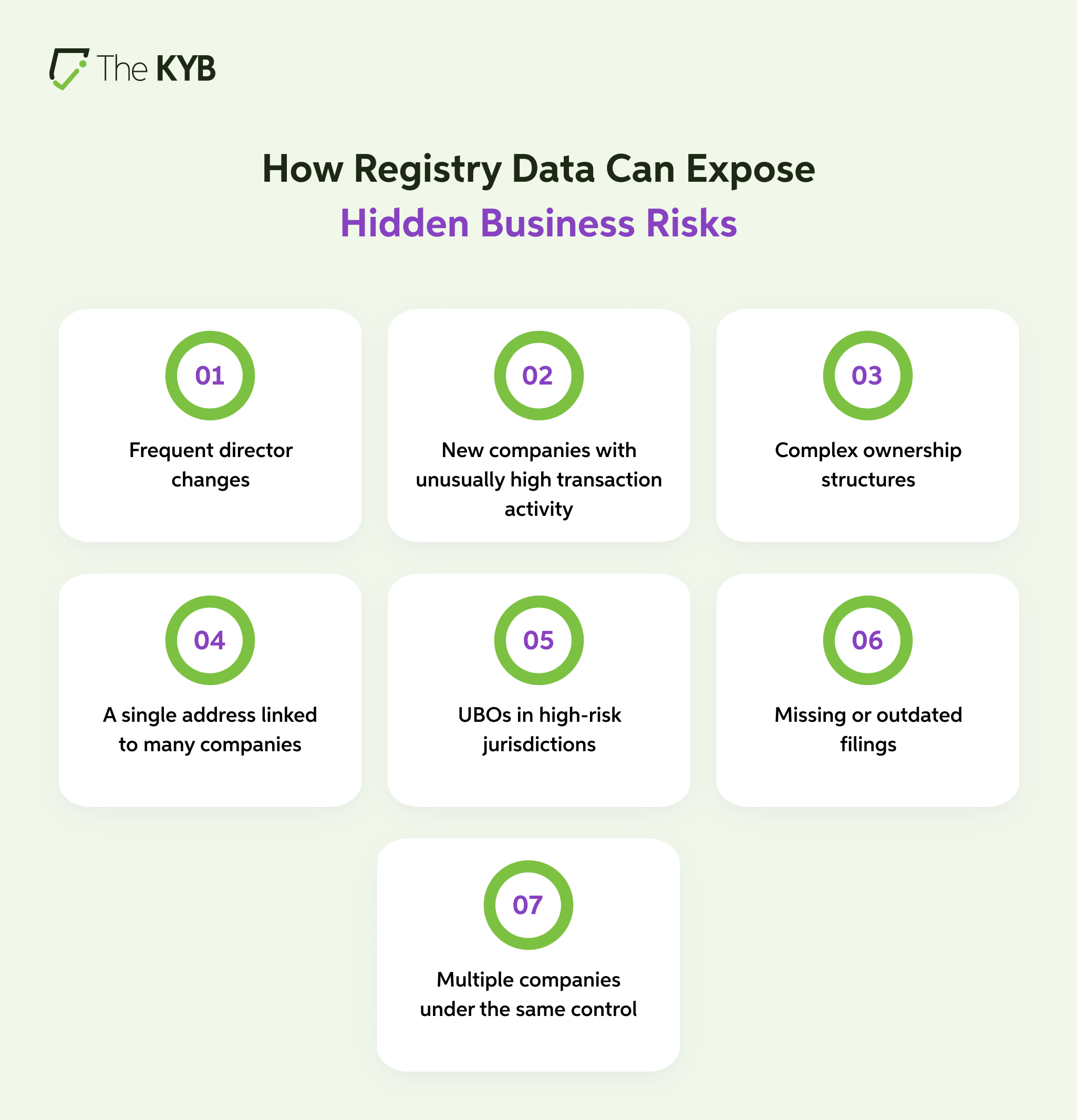
Corporate structures often hide who controls a business. Beneficial ownership information, combined with transactional context and behavioural signals, helps compliance teams understand whether a company’s stated purpose aligns with its risk profile. Without the reliable data on the corporate entities, businesses face a high risk of:
The corporate registry can be the key source for solving these problems. This government-backed data source can be used to fill in the gaps, ultimately helping financial institutions and businesses make informed and risk-based decisions.
The corporate registry is a centralized database. It is the bedrock of business verification because it represents independent, third-party evidence of a company’s existence and the persons who own and control it within a specific country.
The Financial Action Task Force (FATF) Recommendation 24 requires countries to make available accurate, up-to-date basic information about a legal person as a fundamental prerequisite for identifying its ultimate beneficial owners.
The company registry records show the history and legal journey of a business. This information usually falls into several important categories:
Within the fintechs, financial institutions, and marketplaces, risk-based onboarding refers to a strategic workflow to verify new business entities, helping them balance security and speed. This method of onboarding allows businesses to adjust verification to the level of the risks or red flags a corporate entity may have.
This “proportionate” due diligence is also embedded in global standards of anti-money laundering (AML), especially in FATF Recommendations 10 and 24, which are about due diligence and corporate transparency, respectively. These require institutions to know and implement due diligence on both businesses and UBOs. Additionally, these controls can be adjusted according to the risk factors, such as geography, ownership complexity, and overall business activity.
It’s important to understand that the goal of risk-based business onboarding is not to eliminate all potential risks. Instead, this approach helps businesses identify which corporate entities require enhanced due diligence (EDD). Corporate registries provide the primary data layer needed to perform this differentiation in a consistent and defensible way.
Corporate registries act as a source of trust. This is because they allow organizations to verify the identity of a business, identify potential partners, and automate decisions based on the collected risk. According to the FATF report on Best Practices for Beneficial Ownership of Companies, here’s how corporate registries facilitate the process:
The registry is considered to be an independent, government-backed source of evidence. It confirms that a business is a real legal entity. The first step in the onboarding process looks for
The registry of a company removes secrecy within the corporate structure and unveils the ownership (managers, directors, shareholders, and UBOs).
Modern onboarding systems can pull data directly from registries to feed into a “risk scoring” engine.
Business registries are a central data source that allows firms to ensure information is accurate through comparison.
Due to the non-static nature of risk, tracking changes in the business registry remains a crucial thing.
The mere requirement of registry filing serves as a deterrent to criminals.
The true value of this data is realized only when it is translated into a structured risk model. Raw data points must be converted into “risk signals” that feed into a scoring engine.
FATF research suggests that jurisdictions using a multi-pronged approach—combining registry data with other sources—are significantly more effective in preventing the misuse of legal persons. This leads to a number of automated decision paths:
Teams can begin automating their KYB process by implementing a set of clear decision rules. For example, in Spain, failure to deposit annual accounts can result in a registry sheet being “locked,” which serves as a clear prohibitive signal for onboarding. Common rules include:
While corporate registries are useful, they are not perfect. One major challenge is that information is often not adequately or actively verified by the registries themselves. To mitigate these gaps, companies should:
Turning corporate registry data into risk-based decisions is the most effective way to scale KYB operations without compromising security. However, not all registry data is complete or easy to access, and checking national databases manually can take time and lead to mistakes. Organizations need a dependable way to check and combine data from complex global corporate structures.
The KYB makes this process easier by providing a single, trusted source of corporate registry data straight to compliance teams. It helps with KYB, AML, and fraud checks while offering detailed insights into corporate structures. This helps businesses quickly spot potential risks. With coverage across hundreds of jurisdictions and millions of companies, The KYB allows organizations of all sizes to assess risks faster, more accurately, and at a larger scale.
Book a demo today and make informed business decisions before scaling your business.
Verify Any Business,Anywhere In The World
Live registry documents & UBOs across250+ countries
In this blog
Stay Updated!
Join Our Newsletter
Latest Posts
21 April, 2026
07 April, 2026
06 April, 2026
Recent Blogs