

Ecommerce fraud is becoming an increasingly expensive problem. Juniper Research estimates that fraudulent ecommerce transactions will grow from $56 billion in 2025 to $131 billion by 2030, representing a 133% increase.
Yet ecommerce fraud is often treated primarily as a transaction problem. Stolen cards, account takeovers and fraudulent payments deserve attention, but for marketplaces and ecommerce platforms onboarding third party sellers, risk can enter much earlier.
A merchant may operate through a fake or misrepresented company, conceal the individuals behind the business or provide information that does not match official records. In these cases, the risk enters the platform before the first transaction even takes place.
This is why effective ecommerce fraud prevention should extend beyond transaction monitoring. Businesses also need to understand whether the companies entering their ecosystem are legitimate legal entities, who owns or controls them and whether those individuals present relevant compliance risks.
For ecommerce platforms working with merchants, combining fraud controls with Know Your Business can create a stronger approach to merchant risk.
What Is Ecommerce Fraud Prevention?
Ecommerce fraud prevention refers to the processes, technologies and controls used to identify and reduce fraudulent activity across online commerce. Fraud can occur throughout the ecommerce lifecycle, including:
- Merchant onboarding
- Customer account creation
- Login and account access
- Checkout
- Payment processing
- Order fulfilment
- Post transaction activity
An ecommerce fraud prevention system therefore usually requires several layers rather than one standalone fraud check.
A consumer focused retailer may rely heavily on payment authentication, account monitoring and transaction analysis.
Another problem that can arise for a marketplace onboarding hundreds or thousands of merchants is figuring out if the merchants are legitimate or not. Here’s where business verification comes in for a wider fraud prevention strategy.
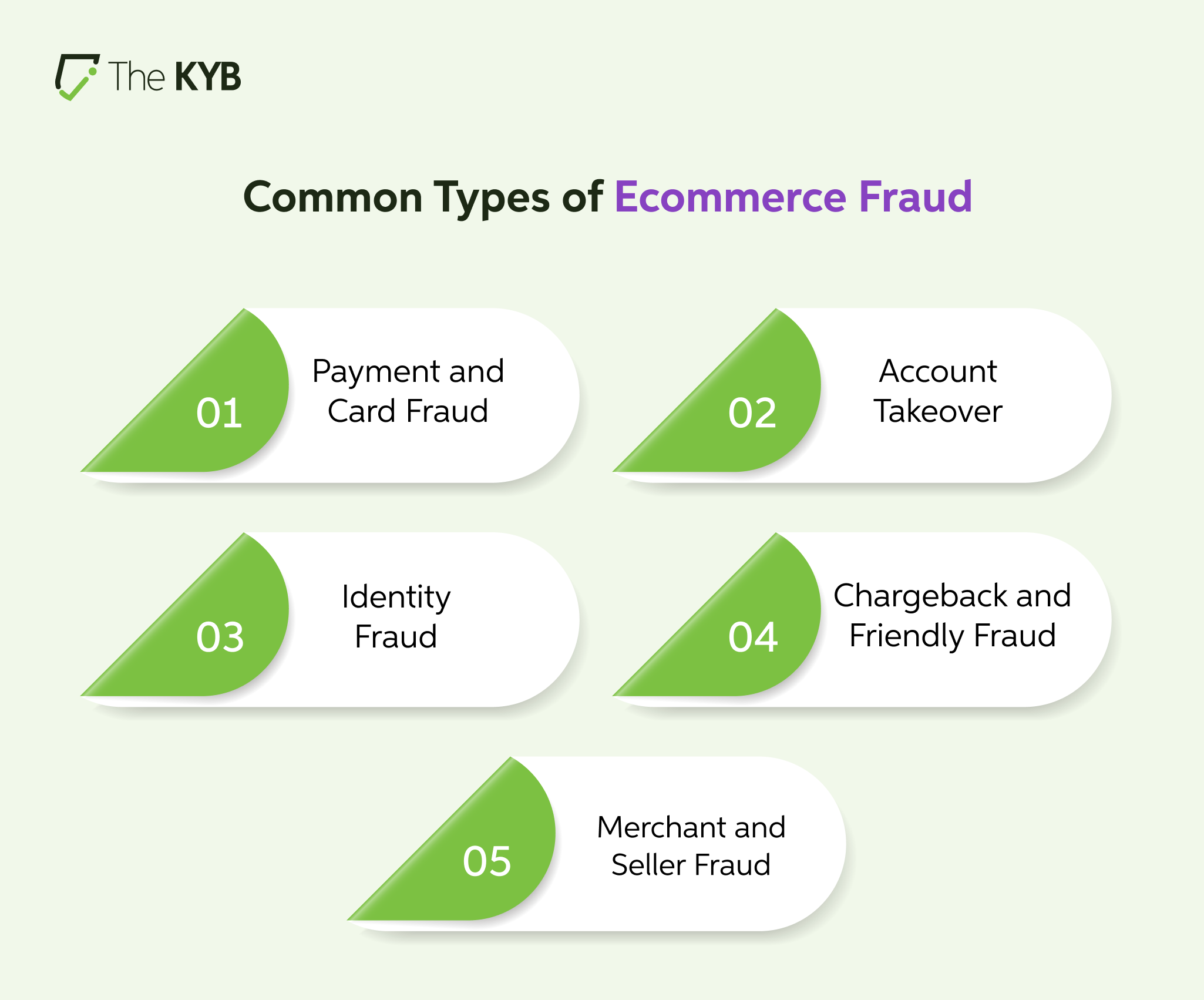
For marketplaces and platforms onboarding business customers, the key question becomes: Is this merchant a legitimate legal business entity and do we know who is actually behind it?
Why Legal Business Entity Verification Matters
A professional website, company name and submitted documentation do not automatically prove that a merchant is legitimate.
Before establishing a commercial relationship, ecommerce platforms may need to verify whether the company exists as a legal entity and whether the information submitted during onboarding matches official business records.
This may involve checking information such as:
- Legal business name
- Company registration number
- Registered address
- Company status
- Directors
- Shareholders
- Ownership structure
This is where The KYB adds value to fraud prevention ecommerce strategies.
Instead of relying only on merchant submitted information, The KYB enables businesses to validate the legal entity against reliable company data. That changes the starting point of fraud prevention.
Rather than waiting for suspicious transactions to appear, platforms can investigate whether the merchant itself is legitimate before allowing it into the ecosystem.
Why UBO Verification Is Important for Ecommerce Platforms
Verifying the legal entity is only part of the picture. A company can be legally registered while its true ownership remains difficult to understand.
Complex structures may include multiple companies, shareholders or entities across different jurisdictions. As a result, the individual ultimately benefiting from or controlling the business may not be obvious from the company name alone.
Identifying and verifying Ultimate Beneficial Owners, or UBOs, gives ecommerce platforms deeper visibility into who sits behind the merchant.
A simplified structure might look like:
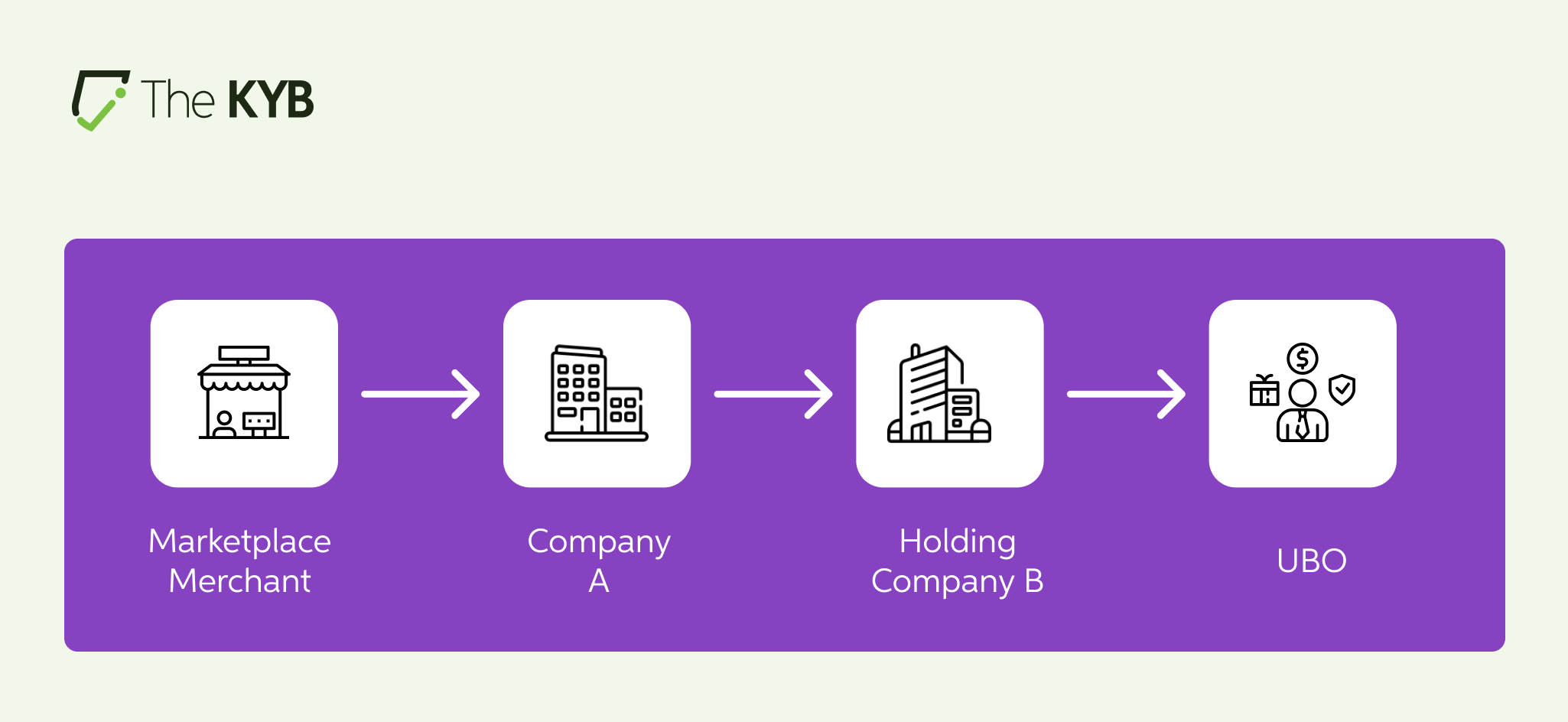
A platform might confirm the company name, but without ownership transparency, it may not be clear who the people behind it are.
In the merchant onboarding process, knowing the structure of the business can be useful in uncovering discrepancies, delving into intricate corporate dynamics, and conducting proper due diligence prior to approval.
How Does an Ecommerce Fraud Prevention System Work?
There is no single ecommerce fraud prevention solution that addresses every type of fraud. A strong framework combines different technologies designed to manage different risks.
A merchant focused workflow may look like:
Merchant application → Legal entity verification → Ownership review → UBO verification → Risk screening → Approval → Ongoing monitoring
Transaction fraud technology can then work in parallel, analysing payments, account behaviour, device behaviour, and buying behaviour. Each layer addresses a different question.
Transaction monitoring questions: Is this activity suspicious?
Identity Verification questions: Who claims to be this person?
While The KYB asks: Is this a legitimate business entity, who are the ultimate owners or controllers?
These technologies are complementary rather than interchangeable.
The Role of Business Verification in Ecommerce Fraud Prevention
For ecommerce platforms onboarding businesses, KYB strengthens the merchant verification layer of fraud prevention.
-
Verify the Legal Business Entity
The KYB helps businesses establish whether a merchant corresponds with a legitimate registered company.
Submitted information can be matched against official business records to check for inconsistencies in the company name, registration details, status, and other key information.
-
Identify and Verify UBOs
Once the ownership structure has been established, ecommerce platforms can identify the relevant UBOs behind the company. Verifying these individuals can provide an additional layer of confidence during merchant due diligence.
-
Understand the Ownership Structure
A business can involve multiple shareholders, parent companies or related legal entities. Ownership analysis helps teams understand how those entities connect and determine who ultimately owns or controls the merchant.
-
Screen Businesses and UBOs for Risk
Verification establishes identity and ownership. Screening helps assess relevant risk.
Businesses and associated individuals can be checked against applicable sanctions, PEP and other risk data where required as part of the platform’s compliance process.
-
Continue Monitoring After Approval
A verified company is not necessarily unchanged forever. Ownership, directors, company status and risk indicators may change after onboarding.
Ongoing monitoring helps ecommerce platforms maintain visibility into relevant changes rather than relying exclusively on the original verification.
Ecommerce Fraud Prevention Best Practices
Effective ecommerce fraud prevention best practices should cover both transaction risk and merchant legitimacy.
First, ecommerce platforms should verify legal business entities before activating merchants. Submitted information should be checked against reliable company records rather than accepted at face value.
Second, platforms should understand who owns and controls the businesses they onboard. Where relevant, this means reviewing corporate structures and identifying UBOs rather than stopping at the first registered company.
Third, UBOs and businesses should undergo appropriate risk screening based on the platform’s compliance requirements.
Fourth, merchant due diligence should be risk based. A simple domestic business may require a different level of review from a complex multi jurisdictional structure.
Fifth, KYB should operate alongside transaction fraud controls. Business verification does not replace payment fraud detection, just as payment monitoring cannot establish whether a legal entity and its owners are genuine.
Finally, relevant business information should continue to be monitored after onboarding. Fraud prevention is stronger when businesses do not treat approval as the end of the risk process.
Ecommerce Fraud Prevention Software vs The KYB Software
Ecommerce fraud prevention software commonly focuses on what happens within accounts and transactions. Typical capabilities may include:
- Transaction risk scoring
- Device intelligence
- Payment monitoring
- Account behaviour analysis
- Chargeback prevention
- Suspicious activity detection
The KYB software addresses a different layer of risk. It focuses on:
- Legal business entity verification
- Company registration data
- Directors and shareholders
- Ownership structures
- UBO identification and verification
- AML and risk screening
- Ongoing business monitoring
For ecommerce marketplaces, these systems can work together.
An ecommerce fraud prevention platform may identify suspicious merchant activity after onboarding, while The KYB technology helps establish whether the merchant was a legitimate business and who stood behind it in the first place.
How to Choose an Ecommerce Fraud Prevention Provider
Before comparing ecommerce fraud prevention companies, businesses should define exactly which risks they need to address.
A direct to consumer retailer may focus primarily on stolen payment credentials and account fraud.
A marketplace or ecommerce platform onboarding third party businesses may also require strong merchant verification capabilities. When evaluating an ecommerce fraud prevention provider, consider:
-
Fraud Coverage
Identify which types of fraud the system is designed to detect.
-
Legal Entity Verification
Determine whether business customers can be checked against reliable corporate information.
-
Ownership Visibility
Assess whether the solution can trace company ownership and help identify the individuals behind complex structures.
-
UBO Verification and Screening
For platforms requiring deeper merchant due diligence, consider how beneficial owners are identified, verified and screened.
-
Ongoing Monitoring
Merchant risk can change after onboarding. Look for processes that help maintain visibility over time.
-
Integration and Automation
An effective system should fit naturally into existing merchant onboarding and compliance workflows.
The right ecommerce fraud prevention services ultimately depend on whether the organization needs payment controls, identity verification, business verification or a combination of these capabilities.
How The KYB Supports Ecommerce Fraud Prevention
The KYB strengthens ecommerce fraud prevention at the merchant onboarding and business verification layer.
It helps ecommerce platforms verify legal business entities and compare submitted merchant information with business records.
The KYB can also help teams understand corporate ownership structures, identify the relevant UBOs behind a business and verify the individuals connected to that ownership.
Once the business and its owners have been established, AML screening can support risk based due diligence.
Frequently Asked Questions
-
Can Ecommerce Fraud Occur Through Legitimate Registered Companies?
Yes. A company can be legally registered and still be involved in fraudulent or high risk activity. This is why registration checks alone may not be enough. Ownership information, UBOs and relevant risk indicators may also need to be reviewed.
-
What Happens if A Merchant Changes Ownership After Onboarding?
A change in ownership can affect the merchant’s risk profile. Ecommerce platforms may need to review the new ownership structure, identify new beneficial owners and conduct relevant verification or screening checks.
-
What Are The Warning Signs of a Potentially Fraudulent Ecommerce Merchant?
Warning signs can include inconsistent company information, mismatched addresses, unclear ownership structures, suspicious documentation or frequent changes in directors and shareholders. These signals do not confirm fraud but may require further review.